CELAFISCS Manifesto +10
13 Calls to Action for the Promotion of Physical Activity and Public Health.
In 2020, faced with the COVID-19 pandemic and its profound impacts on daily life, the Center for Studies of the Physical Fitness Research Laboratory of São Caetano do Sul (CELAFISCS) launched the “International Manifesto for the Promotion of Physical Activity Post-COVID-19” with a collective call to action. Its recommendations reaffirmed the importance of movement for health and highlighted the need to expand opportunities for an active life, reduce sedentary behavior and inequalities, and connect individuals, communities, and institutions toward the development of public policies in this area.
Six years later, many of these principles remain relevant. At the same time, new scientific evidence and social, environmental, and technological transformations have expanded the challenges and possibilities for promoting physical activity and reducing sedentary behavior. Every minute counts: recent studies show that even brief bouts of vigorous physical activity incorporated into daily life can be associated with significant health benefits. The advancement of digital technologies and artificial intelligence, along with growing attention to different life trajectories, equity, social participation, governance, and the impacts of climate change, invite us to revisit and update that call.
The CELAFISCS Manifesto+10 arises from this continuity and transformation. Rather than merely updating the 2020 Manifesto, it seeks to strengthen its principles and expand its reach—connecting knowledge, people, environments, and policies to create conditions and opportunities that foster a physically active life.
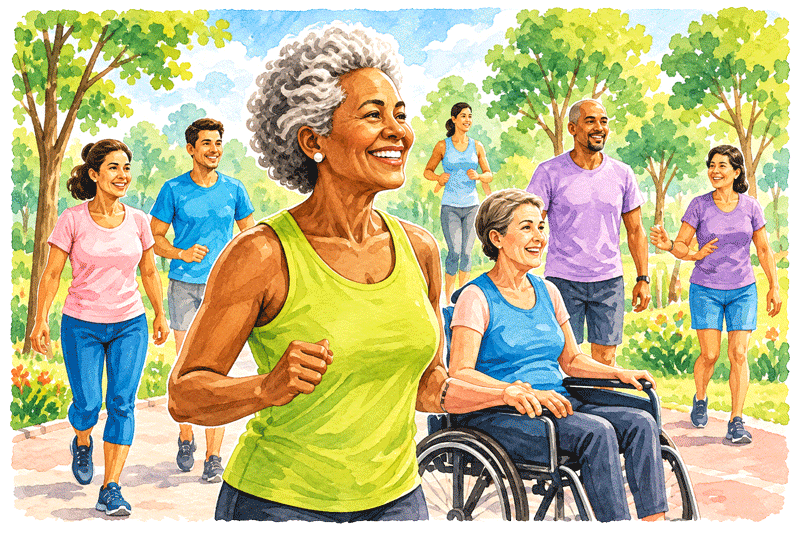
We thus present 13 Calls to Action directed at individuals, professionals, communities, institutions, and governments. They stem from a simple yet fundamental idea: every movement counts, if performed by choice. At the same time, opportunities to move do not depend solely on individual choices: they must also be enabled and constructed collectively.
The Manifesto did not end in 2020
The public presentation launched a process of dissemination, endorsement, dialogue, and creation of new content.
2020
Launch of the Original Manifesto
+600
Endorsements from individuals and organizations.
Formats
Newsletters, Seminars, Podcasts, E-Book.
2026
Continuity – A new cycle to update and expand.
Why revisit the Manifesto six years later?
Many principles remain the same. The context, however, has expanded.
- New evidence showing that even brief moments of physical activity can bring benefits.
- Digital transformation and artificial intelligence create new possibilities.
- Different life stages, barriers, and opportunities must be considered.
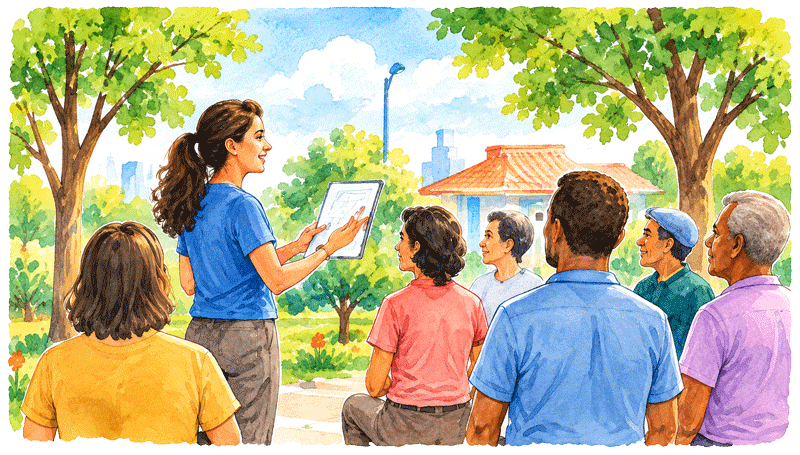
- Promoting physical activity requires coordination between individuals, communities, and institutions.
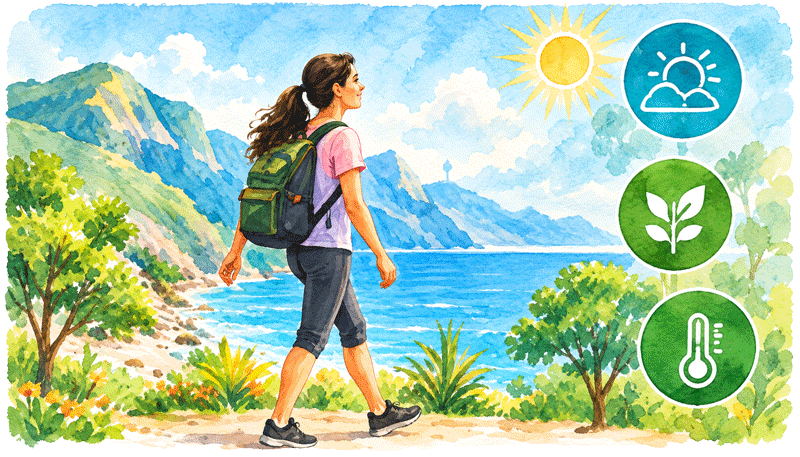
- Environmental conditions also shape the opportunities for movement.
The Manifesto +10 seeks to strengthen its principles and expand its reach.
These 13 calls address choice, opportunity, environment, knowledge, policy, and collective responsibility.
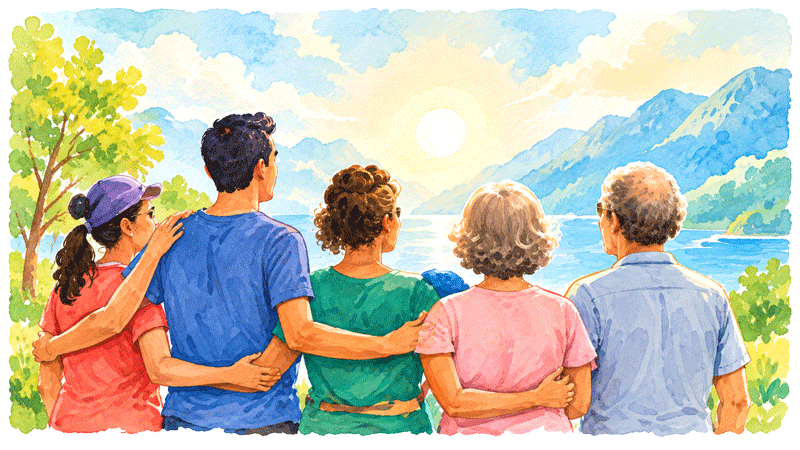
A manifesto only gains meaning when its ideas are transformed into action. The 13 Calls to Action presented here are not a final destination, but an invitation for individuals, professionals, communities, institutions, companies, and governments to recognize their role in building a more active society.
Creating opportunities for movement requires—beyond knowledge and individual choices—cross-sector public policies that encompass education, supportive environments, inclusion, social participation, innovation, integrated strategies, and collective commitment. Different contexts will require different paths, but all can contribute to making movement a greater part of daily life.
The challenges of the coming years will differ from those that gave rise to the 2020 Manifesto, and new ones will certainly emerge. Therefore, promoting physical activity and reducing sedentary behavior require an ongoing capacity to learn, adapt, cooperate, and act. The time has come for a massive task force—a call to action—to bridge the gap between the robust scientific evidence demonstrating the importance of physical activity for health and its effective implementation across all settings, from individual interventions to public policy.
Every minute counts.
Every step counts.
Every movement counts.
Any physical activity you do is a gift to yourself. Without that gift, there is no future.






Ana Miragaya
GPEO-UERJ
e-Museu do Esporte
Antonio Carlos Bramante
Professor da UNICAMP (Aposentado)
Coordenador do Laboratório de Gestão das Experiências de Lazer
LAGEL/GESPORTE/FEF-UnB
Beatriz Ferreira
Grupo de pesquisa NGIME-UFJF
Vice Presidente IAPESGW
Bruno Gualano
Professor na Faculdade de Medicina da USP
Dartagnan Pinto guedes
Professor na Faculdade de Educação Física da Universidade Estadual de Londrina
Douglas Roque Andrade
GEPAF / EACH / USP / CEPEDOC
Francisco Pitanga
Professor na Faculdade de Educação Física da Universidade Federal da Bahia
Laércio Elias Pereira
Coordenador do Centro Esportivo Virtual (CEV)
Lamartine Pereira da Costa
Universidade do Estado do Rio de Janeiro-UERJ
Programa de Pós Graduação em Ciências do Exercício e do Esporte
Luís Carlos de Oliveira
CELAFISCS
Programa Agita São Paulo
Luiz Guilherme Grossi Porto
Grupo de Estudos em Fisiologia e Epidemiologia do Exercício e da Atividade Física – GEAFS
FEF / UnB
Victor Keihan Rodrigues Matsudo
CELAFISCS
Programa Agita São Paulo
Bibliographic References
AN, R.; SHEN, J.; WANG, J.; YANG, Y. A scoping review of methodologies for applying artificial intelligence to physical activity interventions. Journal of Sport and Health Science, v. 13, n. 3, p. 428-441, 2024. DOI: 10.1016/j.jshs.2023.09.010.
BATISTA DE OLIVEIRA JUNIOR, J.; POSSAMAI, K.; CARVALHO UEDA, L. S.; DELEVATTI, R. S.; MILISTETD, M.; FERNANDES DA SILVA, J.; NASCIMENTO, J. V. do. Public policies for the promotion of physical education, health, and sports in Brazil: a scoping review of approaches, challenges, and impacts. International Journal of Sport Policy and Politics, v. 18, n. 2, p. 409-437, 2026. DOI: 10.1080/19406940.2025.2583965.
BERNARDO, D.; ALECRIM, J. V.; FERREIRA, Q. R.; ANDRADE, D. R. Políticas públicas de atividade física no Brasil: quais caminhos já percorremos? Revista Brasileira de Atividade Física & Saúde, v. 29, e0372, 2024. DOI: 10.12820/rbafs.29e0372.
BRAMANTE, A. C.; GIANNINI, F. B. C.; TEODORO, A. P. E. G. Explorando o ChatGPT: o conceito de lazer mudou após 12 meses? Licere – Revista do Programa de Pós-Graduação Interdisciplinar em Estudos do Lazer, v. 29, n. 1, p. 1-30, 2026.
CARL, J.; BARNETT, L. M.; JEREBINE, A.; MAZZOLI, E.; MOUTON, A.; BARRATT, J.; ELSBORG, P.; GREEN, N.; NIEDERBERGER, M.; SUM, R. K.; GloPL CONSORTIUM. The Global Physical Literacy Action Framework: process and outcomes. Sports Medicine, 2026. DOI: 10.1007/s40279-026-02485-6.
FLORINDO, A. A.; GOULARDINS, G. S.; ANDRADE, D. R.; KNEBEL, M. T. G.; SANTOS, M. P.; HALLAL, P. C.; MOTA, J. Em defesa da caminhada e do uso de bicicleta como deslocamento no Brasil. Cadernos de Saúde Pública, v. 41, n. 2, e00099324, 2025. DOI: 10.1590/0102-311XPT099324.
GARCÍA-HERMOSO, A.; LÓPEZ-GIL, J. F.; EZZATVAR, Y. Tracking of physical activity and sport from childhood and adolescence to adulthood: a systematic review and meta-analysis. Translational Pediatrics, v. 14, n. 6, p. 1117-1128, 2025. DOI: 10.21037/tp-2025-89.
GIATTI, Leandro Luiz; NOGUEIRA, Thiago; LEMES, Ana Júlia F. L. G. (org.). Caminhos verdes: interfaces saúde e ambiente para o desenvolvimento sustentável. São Paulo: Faculdade de Saúde Pública da Universidade de São Paulo, 2024. 399 p. DOI: 10.11606/9786588304136.
GLOBAL DISABILITY SUMMIT. Amman-Berlin Declaration on Global Disability Inclusion. Berlin: Global Disability Summit, 2025.
GROPPER, H.; JOHN, J. M.; SUDECK, G.; THIEL, A. The impact of life events and transitions on physical activity: a scoping review. PLOS ONE, v. 15, n. 6, e0234794, 2020. DOI: 10.1371/journal.pone.0234794.
GUALANO, B.; ROSCHEL, H.; VALVERDE, A. The new fitness world: commodifying well-being in the neoliberal era. Einstein (São Paulo), v. 24, supl. 1, eRW1778, 2025. DOI: 10.31744/einstein_journal/2026RW1778.
HALLAL, P. C.; LEE, I.-M.; SARMIENTO, O. L.; POWELL, K. E. The future of physical activity: from sick individuals to healthy populations. International Journal of Epidemiology, v. 53, n. 5, dyae129, 2024. DOI: 10.1093/ije/dyae129.
HANDAM, Natasha Berendonk; SOTERO-MARTINS, Adriana (org.). Saneamento, saúde e ambiente. 1. ed. Belo Horizonte: Editora Poisson, 2024. v. 1, 226 p. DOI: 10.36229/978-65-5866-385-0.
HELSPER, N.; DIPPON, L.; BIRKHOLZ, L.; RÜTTEN, A.; KOHLER, S.; WEBER, P.; PFEIFER, K.; SEMRAU, J. What makes community-based, multilevel physical activity promotion last? A systematic review with narrative synthesis on factors for sustainable implementation. Perspectives in Public Health, v. 145, n. 5, p. 260-271, 2025. DOI: 10.1177/17579139231186693.
KING, O.; WEST, E.; ALSTON, L.; BEKS, H.; CALLISAYA, M.; HUGGINS, C. E.; MURRAY, M.; McNAMARA, K.; PANG, M.; PAYNE, W.; PEETERS, A.; PITHIE, M.; SAYNER, A. M.; WONG SHEE, A. Models and approaches for building knowledge translation capacity and capability in health services: a scoping review. Implementation Science, v. 19, art. 7, 2024. DOI: 10.1186/s13012-024-01336-0.
KULNIK, S. T.; SALBRECHTER, S.; RADWANOVSKY, S.; GARSTENAUER, U.; EBNER, M.; FUHRMEISTER, T.; STAINER-HOCHGATTERER, A.; WURHOFER, D.; ROTH, M. Ganz Salzburg bewegen [All of Salzburg Moving]: a large-scale public involvement project with underserved groups, for the co-design of local and contextualized physical activity promotion concepts. Research Involvement and Engagement, v. 11, art. 92, 2025. DOI: 10.1186/s40900-025-00766-4.
LEE, I.-M.; POWELL, K. E.; SARMIENTO, O. L.; HALLAL, P. C. Even a small dose of physical activity can be good medicine. Nature Medicine, v. 31, n. 2, p. 376-378, 2025. DOI: 10.1038/s41591-024-03396-7.
MILLER, K.; MORLEY, C.; FRASER, B. J.; GALL, S. L.; CLELAND, V. Types of leisure-time physical activity participation in childhood and adolescence, and physical activity behaviours and health outcomes in adulthood: a systematic review. BMC Public Health, v. 24, art. 1789, 2024. DOI: 10.1186/s12889-024-19050-3.
MIRANDA, A. A. M.; SANTANA, D. D.; SCHWINGEL, A.; TURNER, G. M.; HURLEY, K. L.; EDWARDS, K. L.; KEYE, S.; HALLAL, P. C.; FLORINDO, A. A. Social inequalities in leisure-time and transport-related physical activity through the lens of intersectionality: 10-year longitudinal study in Brazil. International Journal of Behavioral Nutrition and Physical Activity, v. 23, art. 64, 2026. DOI: 10.1186/s12966-026-01900-5.
PAGLIARI, C.; ISERNIA, S.; RAPISARDA, L.; BORGNIS, F.; LAZZERONI, D.; BINI, M.; GEROLDI, S.; BAGLIO, F.; BRAMBILLA, L. Different models of cardiac telerehabilitation for people with coronary artery disease: features and effectiveness: a systematic review and meta-analysis. Journal of Clinical Medicine, v. 13, n. 12, art. 3396, 2024. DOI: 10.3390/jcm13123396.
PASQUIM, H.; GUERRA, P.; DALMONTE MALACARNE, J. A.; GUALANO, B. Physical inactivity is not laziness: from individual blame to structural determinants. British Journal of Sports Medicine, 2026. No prelo.
PORTO, L. G. G.; MOLINA, G. E.; MATSUDO, V. K. Physical activity and the coronavirus pandemic: an urgent time to change the recommendation focus. Revista Brasileira de Atividade Física & Saúde, v. 25, e0125, 2020. DOI: 10.12820/rbafs.25e0125.
QUINN, T. D.; GIBBS, B. B. Context matters: the importance of physical activity domains for public health. Journal for the Measurement of Physical Behaviour, v. 6, n. 4, p. 245-249, 2023. DOI: 10.1123/jmpb.2023-0030.
RAMIREZ VARELA, A.; HALLAL, P. C. Does every move really count towards better health? The Lancet Global Health, v. 12, n. 8, p. e1215-e1216, 2024. DOI: 10.1016/S2214-109X(24)00173-6.
ROCHA FERREIRA, M. B. Grupos minoritários e vulneráveis: as pessoas com deficiência e a pandemia COVID-19. In: FERREIRA, E. L. (org.). Teoria e métodos do processo de inclusão educacional: visibilidade, materialidade, fragmentos e multiplicidade. Juiz de Fora: Editora UFJF, 2021. p. 101-109.
RODRÍGUEZ, M. Á.; QUINTANA-CEPEDAL, M.; CHEVAL, B.; THØGERSEN-NTOUMANI, C.; CRESPO, I.; OLMEDILLAS, H. Effect of exercise snacks on fitness and cardiometabolic health in physically inactive individuals: systematic review and meta-analysis. British Journal of Sports Medicine, v. 60, n. 2, p. 133-141, 2026. DOI: 10.1136/bjsports-2025-110027.
RODRÍGUEZ-RODRÍGUEZ, F.; CRISTI-MONTERO, C.; ZURITA-CORVALÁN, N.; BRAND, C.; MOTA, J.; CHILLÓN, P.; GAYA, A. R.; BRAZO-SAYAVERA, J.; AGUILAR-FARIAS, N. Promoting active behaviours in schoolchildren using the socio-ecological model in the physical education class: study protocol of the ACTIBESE project. BMC Pediatrics, v. 25, art. 381, 2025. DOI: 10.1186/s12887-025-05719-0.
SALLIS, J. F.; BULL, F.; BURDETT, R.; FRANK, L. D.; GRIFFITHS, P.; GILES-CORTI, B.; STEVENSON, M. Use of science to guide city planning policy and practice: how to achieve healthy and sustainable future cities. The Lancet, v. 388, n. 10062, p. 2936-2947, 2016. DOI: 10.1016/S0140-6736(16)30068-X.
SILVA, C. S.; GODINHO, C.; ENCANTADO, J. et al. Implementation determinants of physical activity interventions in primary health care settings using the TICD framework: a systematic review. BMC Health Services Research, v. 23, art. 1082, 2023. DOI: 10.1186/s12913-023-09881-y.
SILVA, M. F.; LEÃO, A. L. F.; O’CONNOR, Á.; HALLAL, P. C.; DING, D.; HINCKSON, E.; BENMARHNIA, T.; REIS, R. S. Understanding the relationships between physical activity and climate change: an umbrella review. Journal of Physical Activity and Health, v. 21, n. 12, p. 1263-1275, 2024. DOI: 10.1123/jpah.2024-0284.
SINGH, B.; AHMED, M.; STAIANO, A. E.; GOUGH, C.; PETERSEN, J.; VANDELANOTTE, C. et al. A systematic umbrella review and meta-meta-analysis of eHealth and mHealth interventions for improving lifestyle behaviours. npj Digital Medicine, v. 7, art. 179, 2024. DOI: 10.1038/s41746-024-01172-y.
STAMATAKIS, E.; AHMADI, M. N.; GILL, J. M. R.; THØGERSEN-NTOUMANI, C.; GIBALA, M. J.; DOHERTY, A.; HAMER, M. Association of wearable device-measured vigorous intermittent lifestyle physical activity with mortality. Nature Medicine, v. 28, n. 12, p. 2521-2529, 2022. DOI: 10.1038/s41591-022-02100-x.
UNESCO. International Charter of Physical Education, Physical Activity and Sport. Paris: UNESCO, 2015.
WEGENER, S.; STARK, J.; SUSILO, Y. O.; KERMER, L. Mobility and health operations from a collaborative perspective. In: BUDD, L.; ISON, S.; ATTARD, M. (ed.). The Routledge Handbook of Sustainable Urban Transport. London: Routledge, 2025. p. 85-96. DOI: 10.4324/9781003425489-8.
WORLD HEALTH ORGANIZATION. Every move counts towards better health – says WHO. Geneva: World Health Organization, 2020. Disponível em: https://www.who.int/news/item/25-11-2020-every-move-counts-towards-better-health-says-who. Acesso em: 20 set. 2026.
WORLD HEALTH ORGANIZATION. Global status report on physical activity 2022. Geneva: World Health Organization, 2022. 112 p. ISBN 978-92-4-005915-3. Disponível em: https://www.who.int/publications/i/item/9789240059153.
Centro de Estudos do Laboratório de
Aptidão Física de São Caetano do Sul